Problem
Dry Eye Disease (DED) is a growing eye-health problem linked to prolonged screen use, air pollution, industrial dust, air conditioning, and dry environments. It can cause irritation, burning, redness, and blurred vision, affecting daily life and productivity.
DED is a silent epidemic in eye health. In India, about 350 million people face eye health issues. Its meaning about 1 in 4 India have eye health issues.
Now, dryness is diagnosed by the Schirmer test and TBUT. Both are invasive and painful. Here, there is a need for non-invasive, portable and affordable screening devices in rural/ primary health care so anyone can test their eye health problem instantly without any delay. If symptoms are ignored, some patients may experience persistent discomfort and require more intensive treatment, increasing the financial and personal burden.
Solution / Innovation
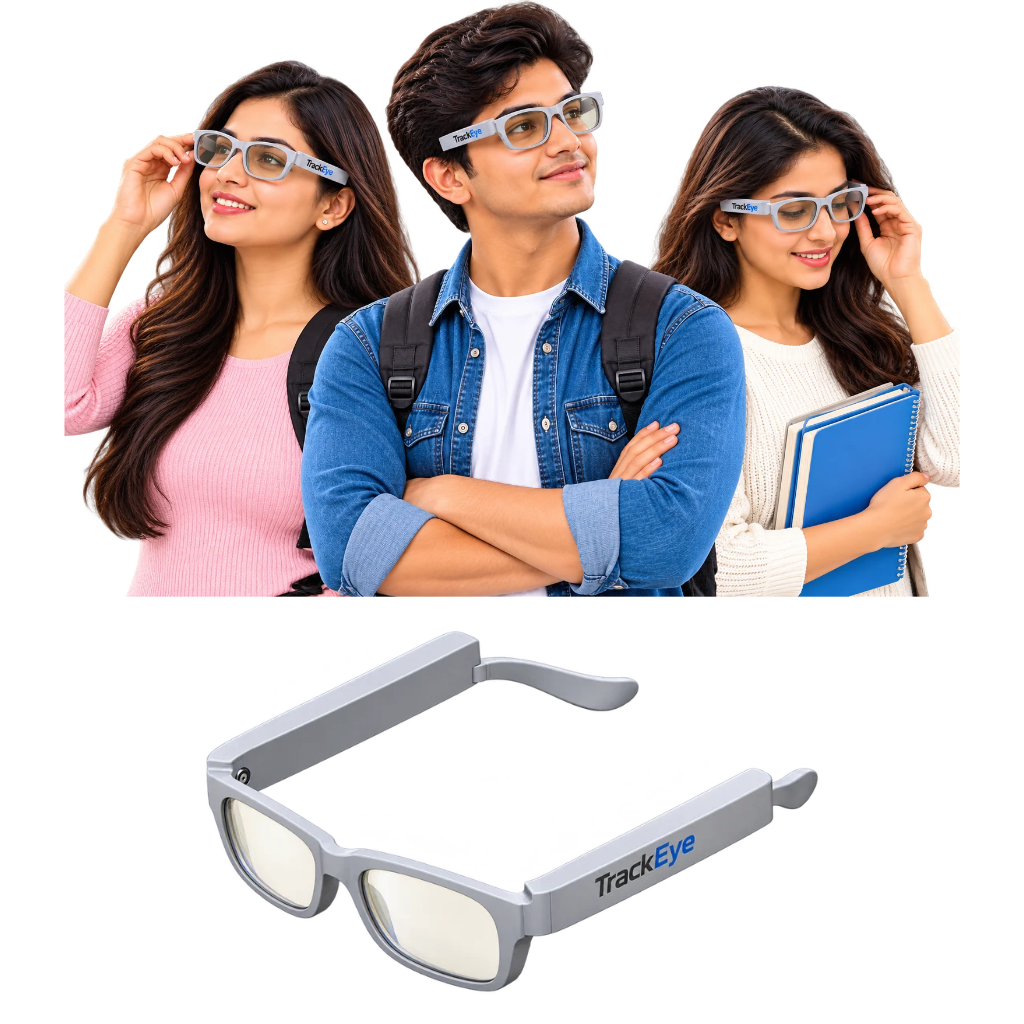
TrackEYE is a wearable, camera-based device being developed to make blink monitoring more accessible and affordable. The device uses machine learning to analyse eye images and monitor blink rate, blink duration, and complete and partial blinks over a defined period. The user wears the glasses, switches on the device, and undergoes a short monitoring session. The recorded data is processed to generate blink-related results that can be viewed on a mobile phone or computer. These results help ophthalmologists (Doctors) better understand a patient’s blinking patterns and eye health, supporting informed clinical assessments and appropriate treatment decisions.
Unlike conventional dry-eye assessments that generally require a clinical visit, traditional tests are invasive and painful. TrackEYE is designed to monitor blinking in a portable and non-invasive manner. It aims to help users understand their blinking patterns during activities such as prolonged screen use and provide ophthalmologists with additional information for dry-eye assessment and follow-up. TrackEYE is a Screening device for DED patients or those who may be DED patients. TrackEYE includes a low-blink reminder feature that encourages users to blink more frequently when a reduced blink rate is detected. This helps DED patients maintain better blinking habits and support everyday eye care.